Neil Hopcroft

A digital misfit

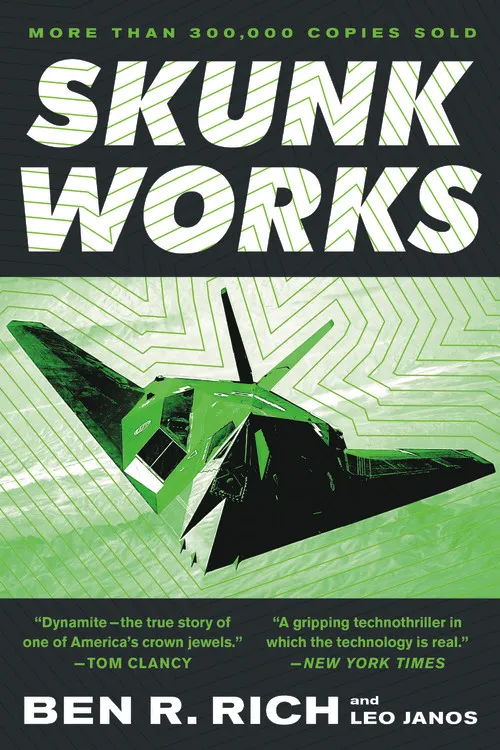
Book review: The Broken Rung

[Audiobook]

The Broken Rung – When the career ladder breaks for women and how they can succeed in spite of it by Kweilin Ellingrud, Lareina Yee and Maria del mar Martinez.

I was trying to find a business book written by a woman – there seems to be a huge collection of books about how men make the business world terrible which provide a little guidance on how to navigate around some of that terrible. This is one of those books, and I cannot argue it is wrong about the terribleness wrought by my kind.

Clearly I am not the anticipated audience for this book, so sometimes it sits a little uncomfortably in the way it talks to me as the listener.

The content itself largely addresses an audience of white women, with some asides about women-of-colour in a very American centric view of the world. It is built around a core of anecdotes and stories of women who have been successful in the business world. And in doing so I feel it misses the point, in the same way many (male targeted) business books do – the vast majority of people do not end up in the kinds of high-flying roles these books purport to help you obtain. We read the books to dream of what might have been, if only we’d been born to a truly privileged family, not because they actual help us in our careers.

That said, it does call out some behaviours seen commonly in men, with a discussion about microaggressions, which are something I’ve observed many times and tried to fight where the setting is appropriate, they are more pervasive and more damaging than I had recognised.

There are some useful observations, especially about the value of building ‘experience capital’ and how making bold moves from one role to a totally different role can accelerate the accretion of such capital. Such observations are applicable to all, not just women in the male world.

This is not the book I wanted – I wanted a book written by a woman explaining how I, as a man in the tech industry, can make life better for everyone. I’m a strong believer in diversity and have in the past taken jobs because of the diversity obvious at interview. I want to use my white male privilege to support people who don’t have such a big voice – frequently the quiet ones are the ones worth listening to, if only they could be heard. This book was not a waste of my time, I don’t feel a pressing need to read/listen to more of the same genre – I would like recommendations for other female-written books that address topics of allyship.


Aspa runestones

The small village of Aspa has a number of rune stones

Sö 137 Side A
“þura : raisþi : stin : þ–si at : ubi : buanti : sin”
“Þora ræisþi stæin þ[ann]si at Øpi, boanda sinn.”
“Þóra raised this stone in memory of Œpir, her husbandman.”
Side B
“: stain : saR:si : stanr : at : ybi : o þik*staþi : at ¶ : þuru : uar : han : uestarla : uakti : karla ¶ [sa þar] * sunr þaþ * raknasuatau(k)i(f)maR[sua]”
“Stæinn saRsi standr at Øpi a þingstaði at Þoru ver. Hann vestarla væknti(?) karla, sa þaR sunR það. …”
“This stone stands in memory of Œpir, on the Assembly-place in memory of Þóra’s husband. He armed(?) (his) men in the west. The son saw this there …”
Sö 138
“: hiar : stainr : stin : at : kuþan : ybis : arfa : ak : þurunaR kylu : broþurs : kuþ hialbin : at :”
“Hier stændr stæinn at goðan Øpis arfa ok ÞorunnaR, Gyllu broðurs. Guð hialpin and.”
“Here stands the stone in memory of Œpir’s and Þórunnr’s good heir, Gylla’s brother. May God help (his) spirit.”
Sö 141
“sloþi auk * rahnfriþ * þau * litu * biþi * bro * k(i)ara * a… * (s)…in * ra-(s)n * eftiR ihulbiarn * sun sin *”
“Sloði ok Ragnfriðr þau letu baði bro gæra o[k] s[tæ]in ræ[i]sa æftiR Igulbiorn, sun sinn.”
“Slóði and Ragnfríðr, they both had the bridge made and the stone raised in memory of Ígulbjôrn, their son.”
Sö 289
“ostriþ : lit : -ira : ku(m)… …usi ÷ at : anunt ÷ auk : raknualt : sun : sin ÷: urþu : ta…R : – (t)an…-…(k)u : ua-u : rikiR : o rauniki : ak : snialastiR : i : suiþiuþu”
“Astrið let [g]æra kum[bl þa]usi at Anund ok Ragnvald, sun sinn. Urðu da[uði]R [i] Dan[mar]ku, va[R]u rikiR a Rauningi ok sniallastiR i Sveþiuðu.”
“Astrid had this memorial made after Anund and Ragnvald, her son. (They) died in Denmark, were powerful in Rauningi and the ablest in Sweden.”


Odens berg

From the board at the site (I couldn’t find any information with Google):

“Här är ett område fullt av historia. Det börjar med Odens Berg under Järnåaldern och går from till statarnas 1930-tal.

Väster om vägen har registrerats ett 60-tal flacka gravar. Vid vägen mot Ärsta ligger ett gravfält med ett 20-tal gravhögar. Att urskilja de flacka fornlämningarna är svårt om man inte är specialist.

De flacka gravformerna tyder på att den äldsta delen i det här fornminnesområdet är det väster om vägen. Där ligger en stor kvadratisk stensättning. Den har tydliga kantstenar och har haft en rest sten i mitten.

Vid undersökningar av gravar har det visat sig att resta stenar placerades på mansgravar. Gravklot ligger följaktligen på kvinnogravar.

Fornlämningarna gränsar till den gamla fastigheten Onsberga. Den hette på 1300-talet Odensberg och tyder på forntida Odenskult här i trakten.

Odens Berg tyckte de först kristnade illa om. Namnet var ju hedniskt och hade att göra med den förkristna tron på Oden, Tor, Frö och de andra gudarna.

Gravhögarna nära Ärsta är med sin välvda form typiska för gravskicket århundradena innan kristendomen kom till landet.

Gravarna är inte utgrävda men en undersökning skulle sannolikt resultera i fynd av brända ben, keramikbitar, redskap, smycken and kanske vapen. Brandgravskicket var det vanliga under denna tid.

I närheten fanns en gård eller mindre by under järnålderns slutskede. Kanske låg den vid Ärsta där den nuvarande bebyggelsens gårdar ligger.”

Which I think means roughly:

“Here is an area full of history. That began with Odens Berg until 1930s.

West of the road are 60 flat graves. With the road to Ärsta lie a gravefield with 20 grave piles. Discerning the ancient ruins are hard without a specialist.

The flat graves indicate the oldest memorials are west of the road. There lie square stones. That have been carved and put up.

Excavations show they stand on graves. Grave spheres lie following the women.

The area shows the old border of Onsberga. The in 12th century called Odensberg after ancient Oden worshippers.

Odens Berg thought badly of the first Christians. Name was heathen and had made believe in Oden, Thor, Froe and the other gods.

Grave piles near Ärsta are made in arched form typical of graves in the centuries before Christendom game to the land.

Excavations have found a burnt leg, bits of pottery, tools, jewelry and perhaps weapons. Fire graves lay until this time.

In the vacinity was a farm until the end of the iron age. Maybe near Ärsta where the modern farm lies.”

…if anyone has any better suggestions for the translation let me know.