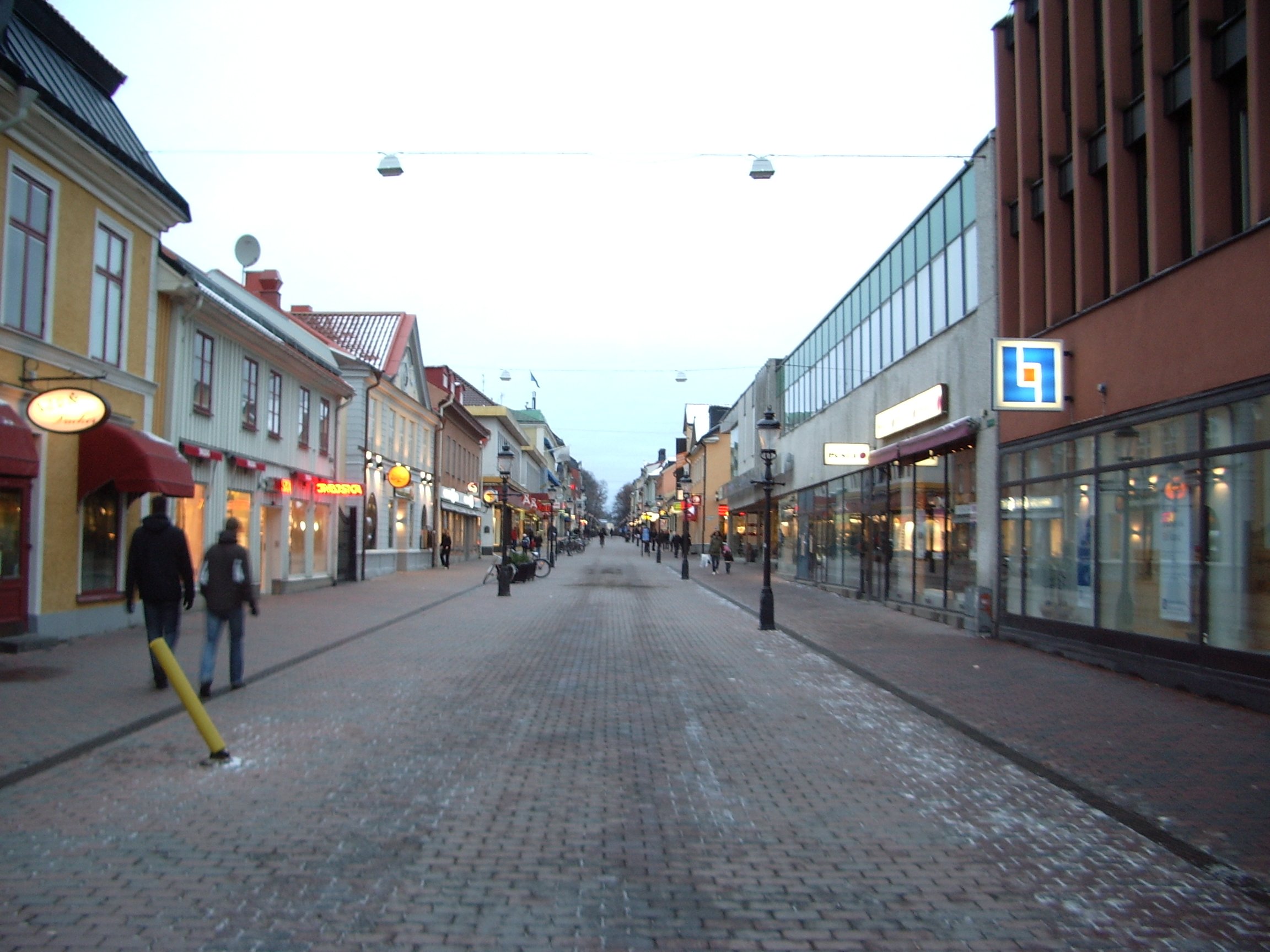
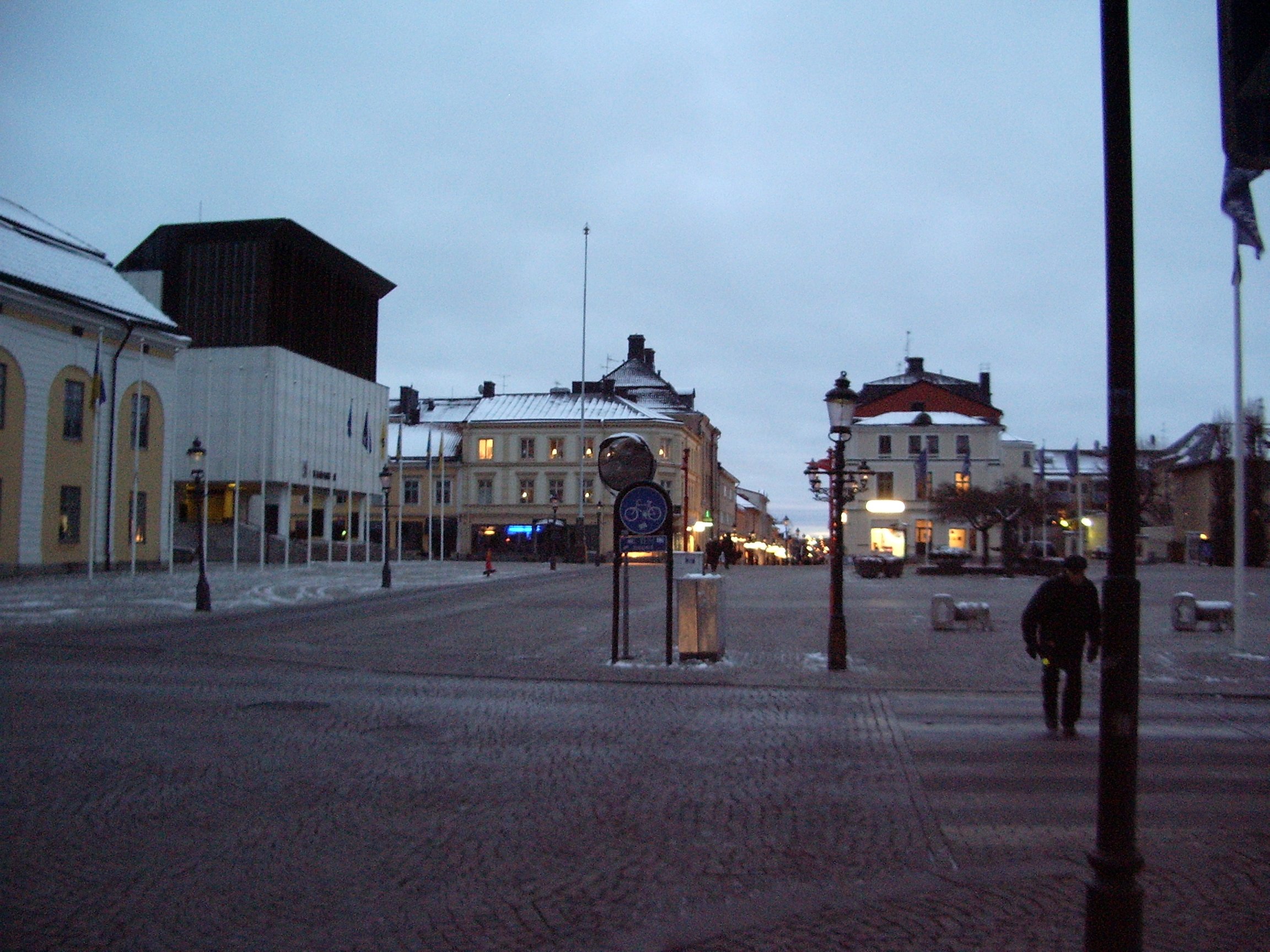
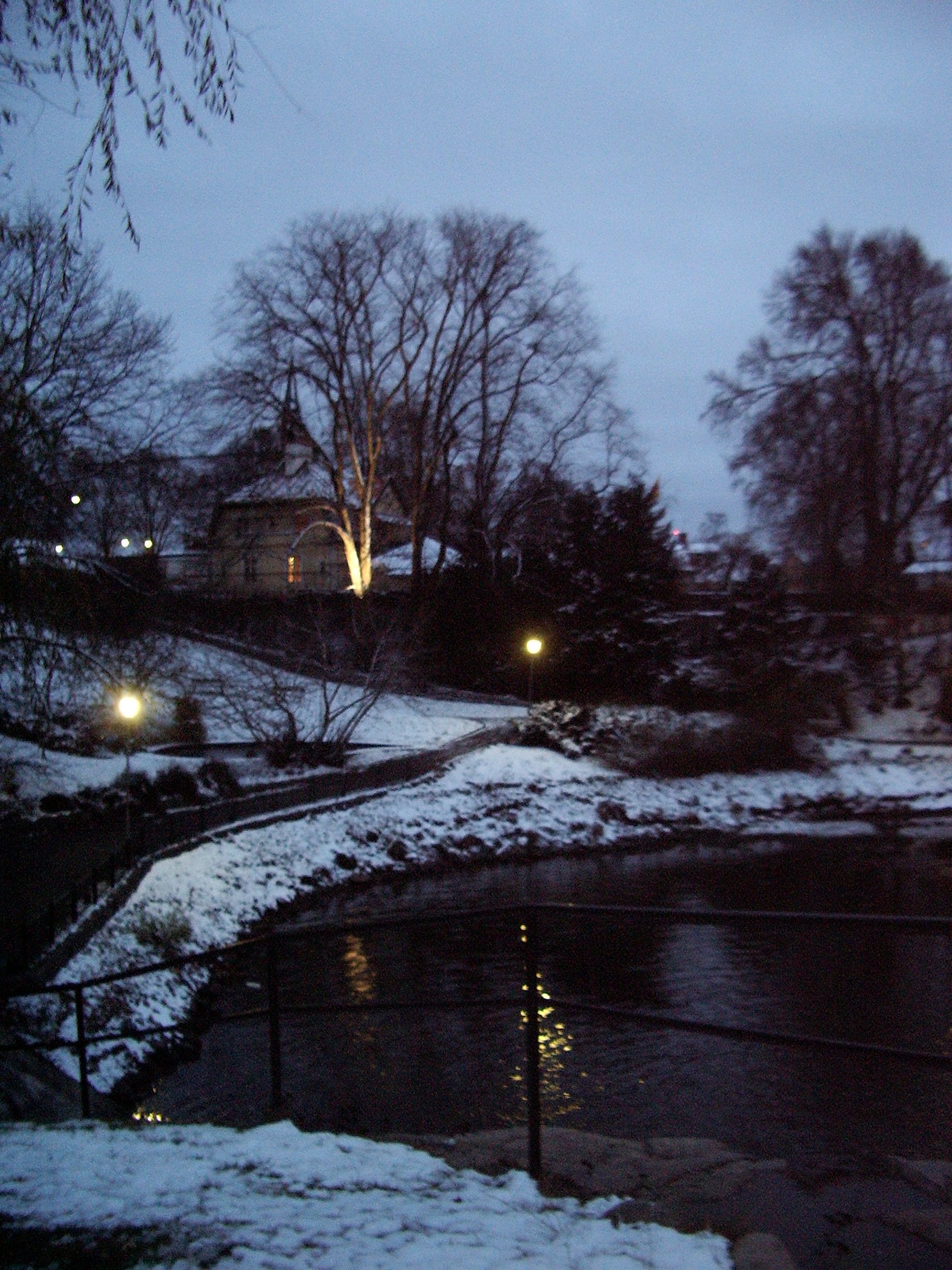
The town itself clearly used to be a major industrial centre, but now it is more of a tourist centre, with the old mills next to the river turned into heritage museums and handcraft shops. Unfortunately I didn’t find the river until after dark so didn’t get to see it properly, so would like to explore it a little more during daylight.
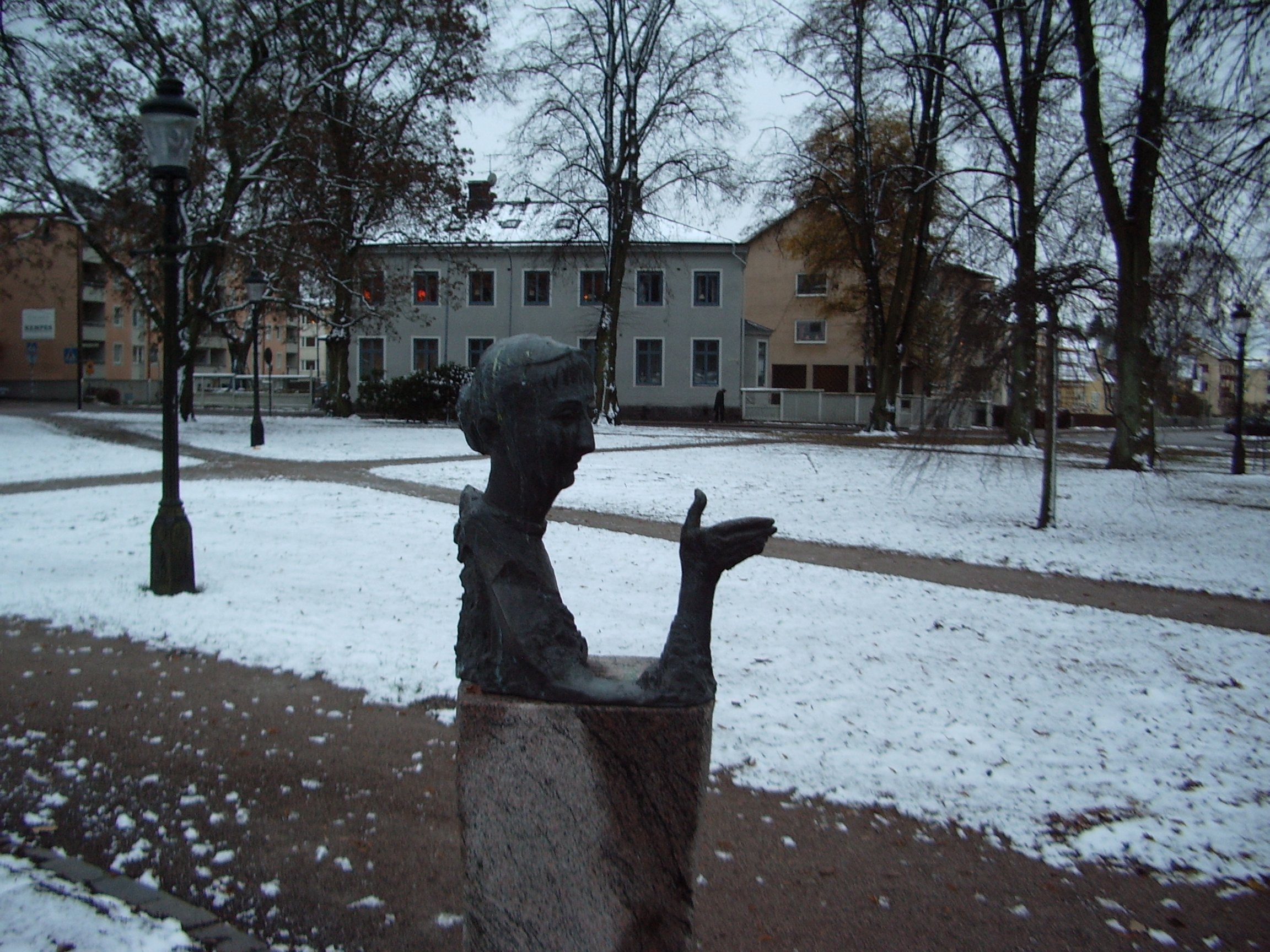
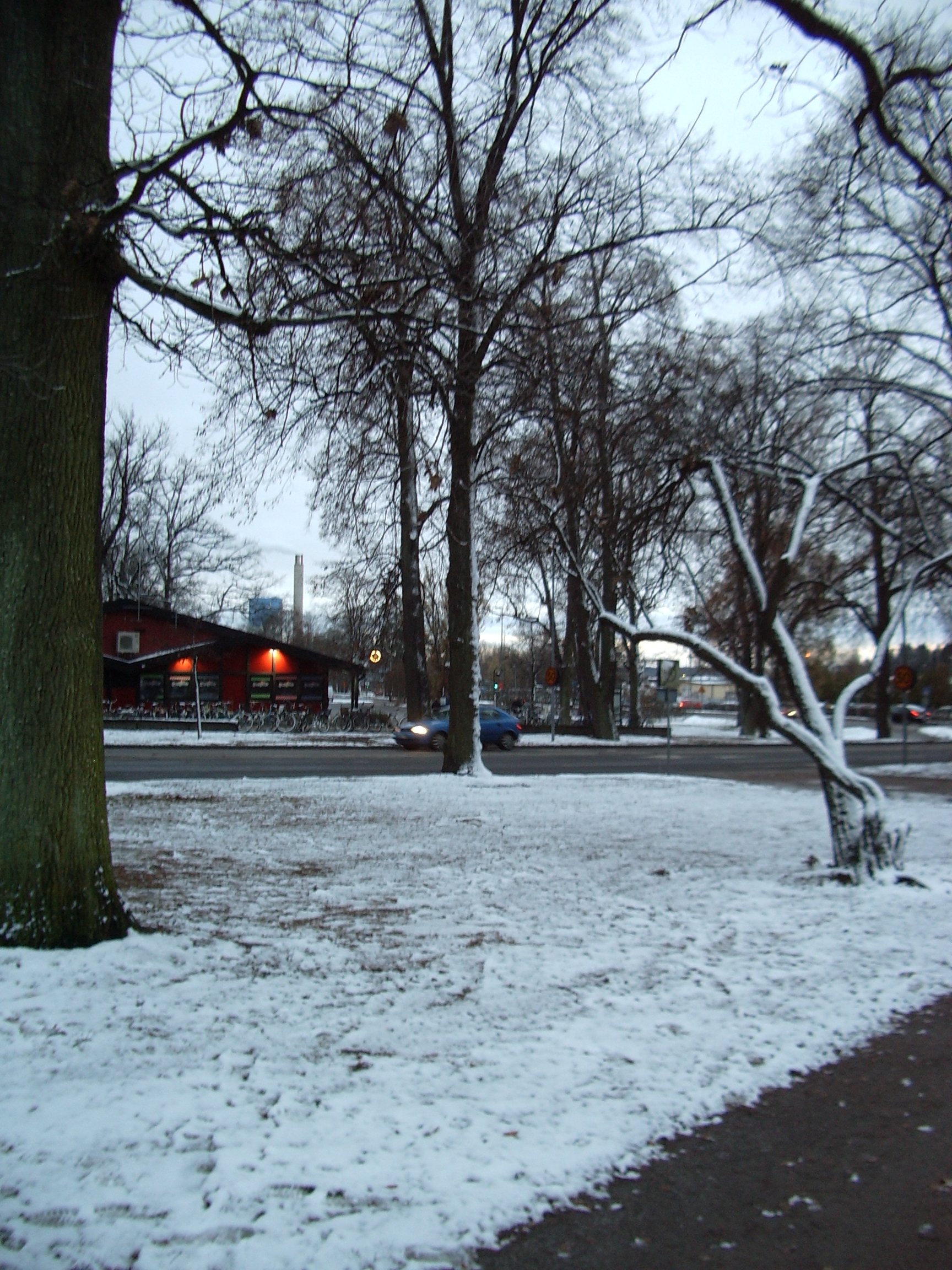
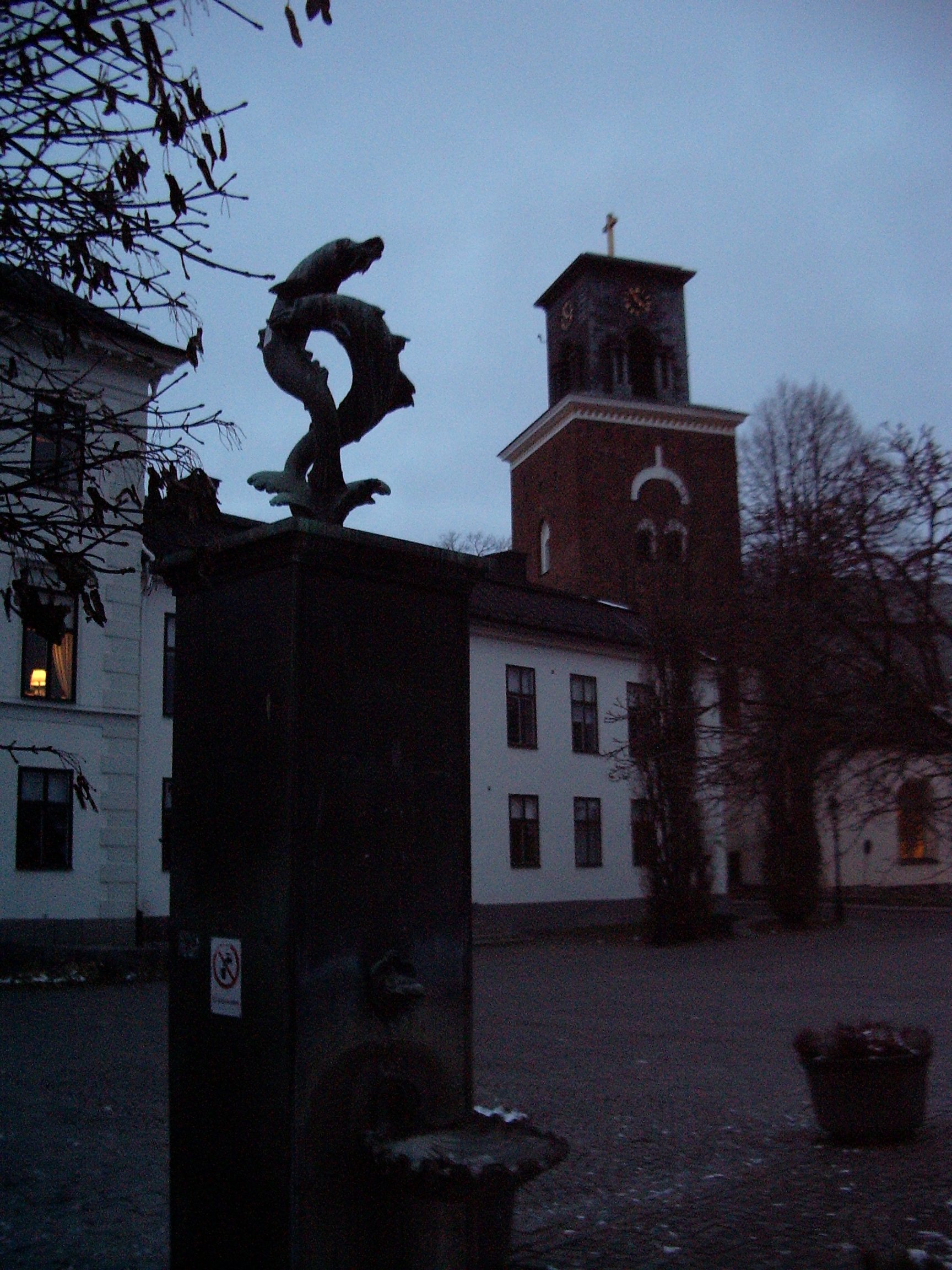
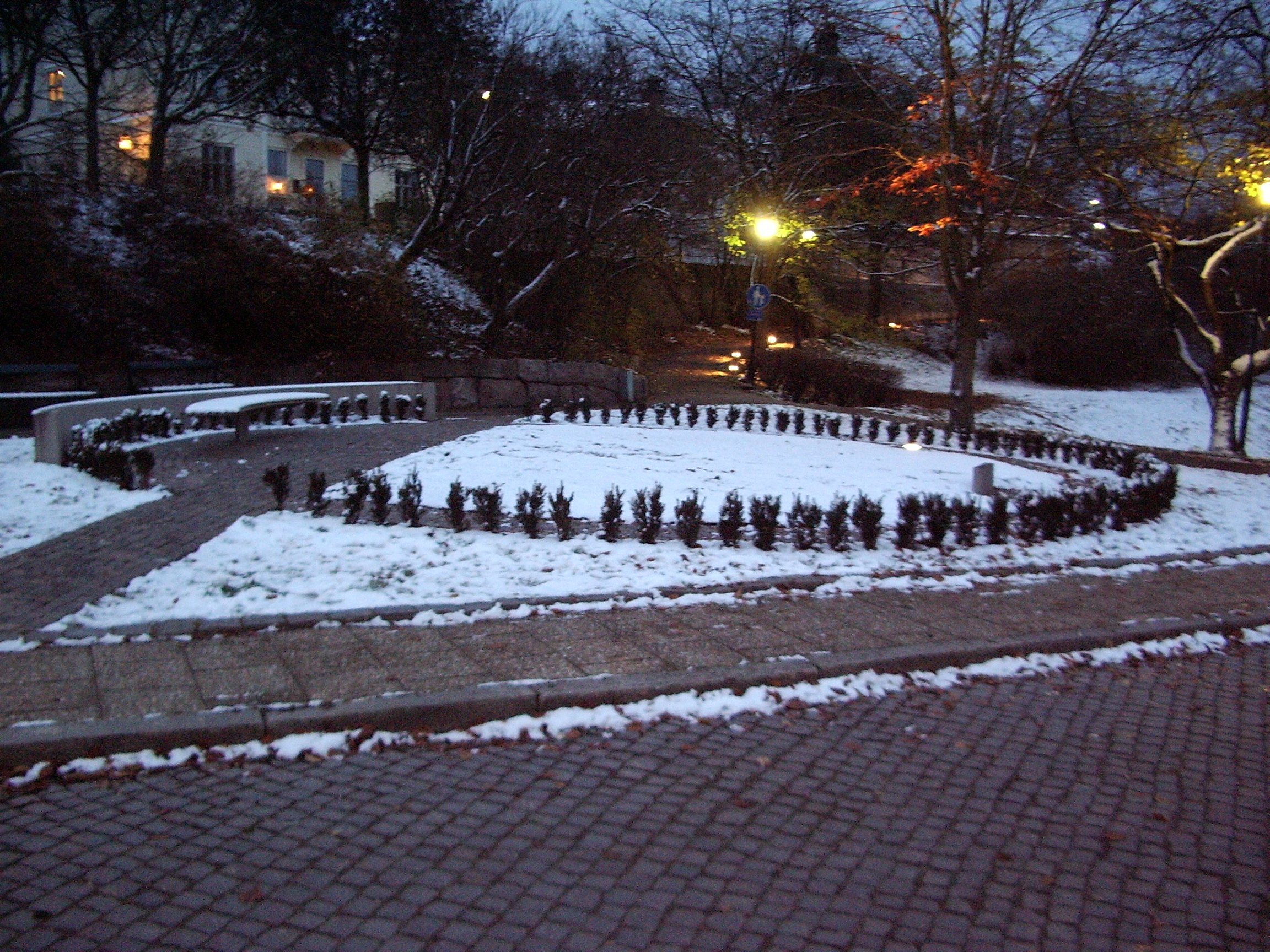
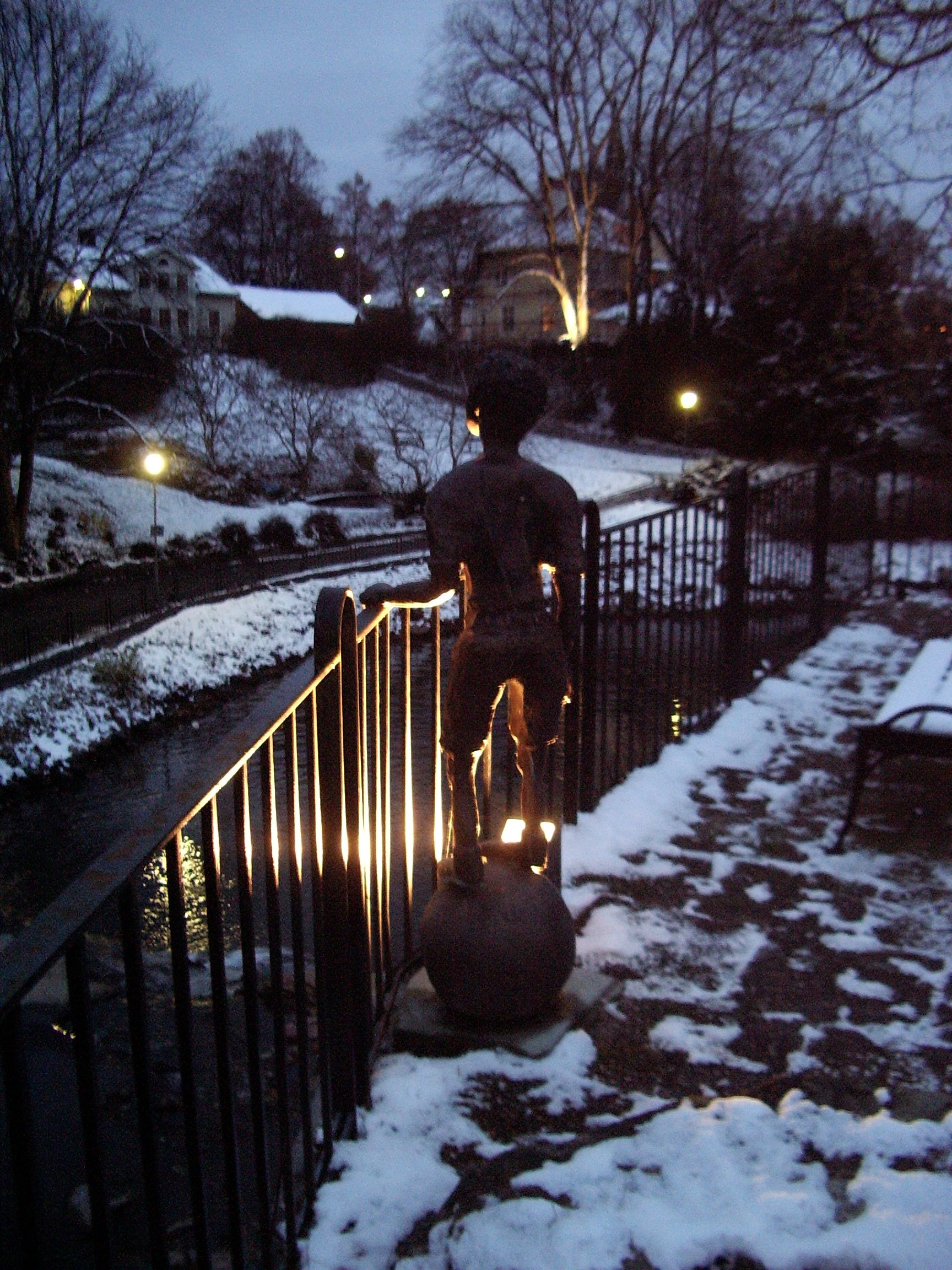
Nyköping high streetA statue in the parkThe parkA water fountain in the main squareThe main square, looking down the high streetSome gardens near the industrial heritage areaMore gardensA memorial to the industry in the town
I hired a car to collect A from the airport upon her return recently, it had snowed a little in the few days beforehand, but the roads themselves were clear. The cars here come with spiked tyres, which make quite a racket when theres no snow underwheel.
Lunch stopThe most boring looking car everOn the roadSnow in the woods by a service area
I got off the boat to Vaxholm to explore while I awaited the next return boat back to the city centre. The town itself is a small town of around 5000 people, sometimes considered the capital of the archipelago.
It is not a large town, though it does have an impressive castle, standing protecting the waterway connecting Stockholm to the Baltic sea. The town is largely made of wooden built houses, with a few modern buildings of other materials.
I took this picture because I liked the ancient trees, but then noticed the driver training setup
The top of the tourist information building by the town squareA petrol stationSunset over the car ferries
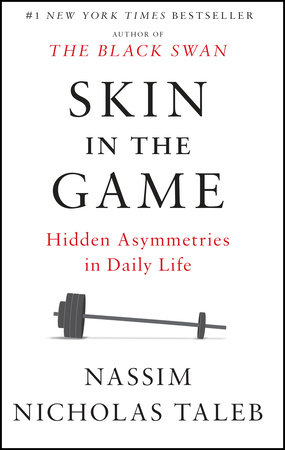
Skin in the Game, Hidden Asymmetries in Everyday Life, is a book about the meaning and value of risk taking. The main premise being that for risk taking to have any value there must be some downside for the risk taker. If you have no Skin in the Game, you have no place to be rewarded for the risks you are not taking.
A lot of his worldview comes from his origin as a trader where he learned how to understand and tame risk for his own use, where he also rebelled against the risk controls enforced by his trading masters which held back his ability to put his all into his trades for them.
He covers a lot of examples from the worlds of business and politics, and expresses a particular disdain for career academics, those who have experienced the real world and returned to academia get more of his respect.
One observation he makes is the distinction between risks when seen from an individual and a population point of view, especially where there is risk of ruin for individuals. Populations can benefit from such risks even if they are not rational for individuals. This has parallels with the medical world, where doctors and patients have very different views of those risks and the payoffs from them. I am still trying to find a good exploration of this distinction in the medical realm – I have some ideas in my head of the distinction, but cannot articulate them fluently. I have also seen translation of some of these population disease dynamics ideas into understanding error prevalence in an installed base of embedded systems, but again lack any kind of research to back those ideas up.
While I have read previous books by Taleb, Fooled by Randomness and Black Swan, I picked up on more political opinion in this than his previous works. That opinion sometimes sits uncomfortably with me – I understand he’s got a point to make and it backs that up, but he veers further into libertarian and laissez faire territory than I would like.
There is a kind of breathless self-importance to the voicing (of this audiobook) which verges rather too far toward arrogance given some of the content and its criticism of the works of ‘lesser minds’. The reading itself is clear and accent easy enough to listen to, and would come over better with other, less pompous, material.
The book is a collection of books arranged over a weird collection of chapters – this might make more sense in the printed version but adds a layer of confusion in the audio version.
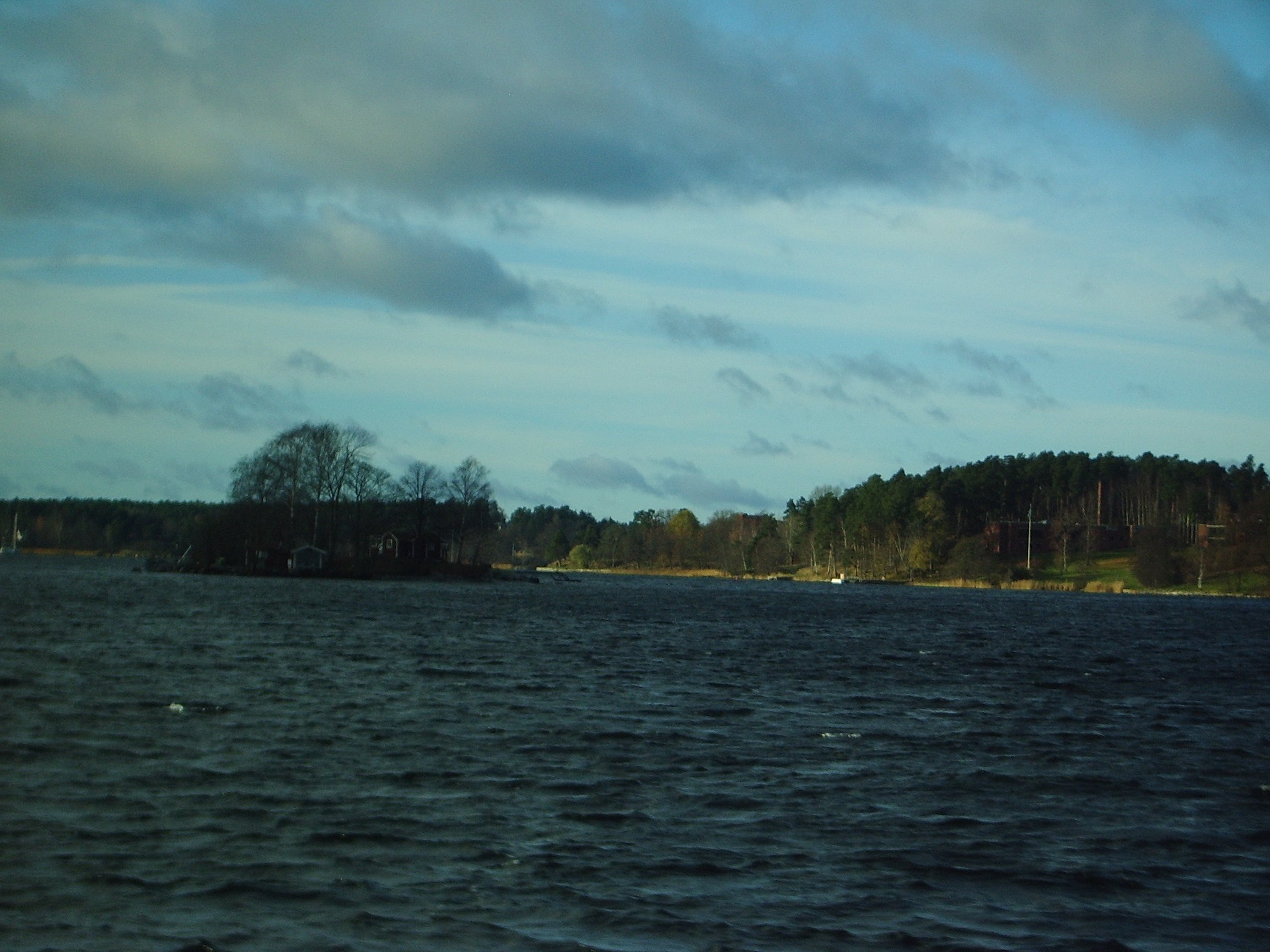
Stockholm is a city built of islands – I had intended to explore them before, but had missed the boat. So I got up especially early for a trip to the archipelago. The boat ride is beautiful, taking just over an hour to get to Vaxholm, stopping at a number of islands on the way, but only the ones it needs to stop at, if there is noone waiting at the stop or wishing to get off it won’t stop there. By each request jetty there is a circular flag on a stick looking somewhat like a lollipop mans stick, but with a lever to raise or lower the flag.
The sea here is quite calm, it is very sheltered by the islands, though I’m sure it is a good deal wobblier when you get out toward the edges of the archipelago.
Some of the islands are really quite small, with perhaps two or three summer houses on them, though the boat doesn’t stop at such small places. There are also a number of larger islands, as well as a couple of stops on the mainland.
One place I would like to explore some more is Gåshaga, the end of the Lidingöbanan, the rail line for the island of Lidingö. Checking the map when I got home suggested a shorter round trip, taking the train back from there, stopping at Ropsten to explore the north side of Djurgården.
The journey back into the centre of Stockholm after dark was wonderful, with many houses lit up against the dark hillsides and forest. The lights building to a crescendo as we arrived back at the quay in the centre of the city.
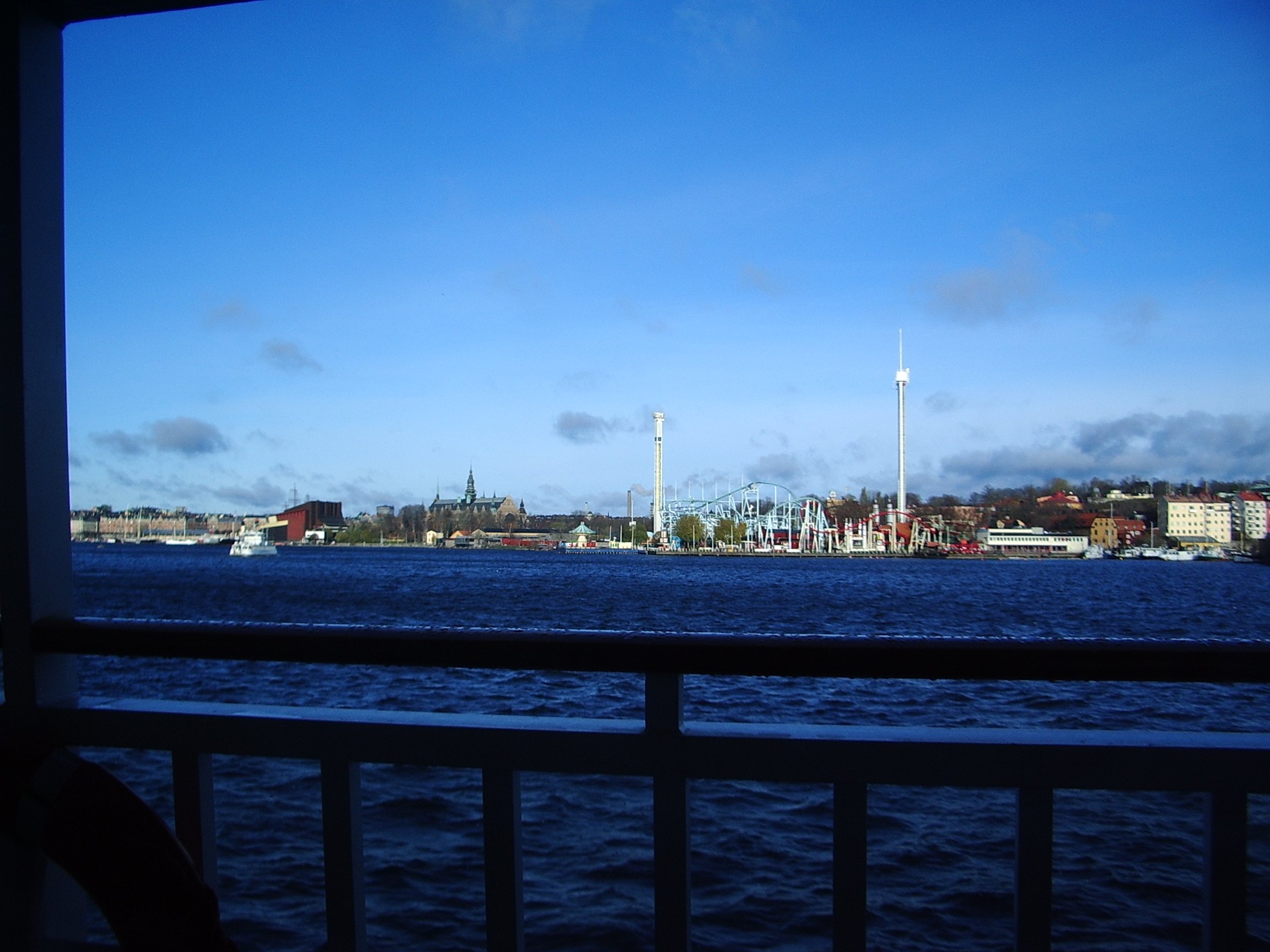
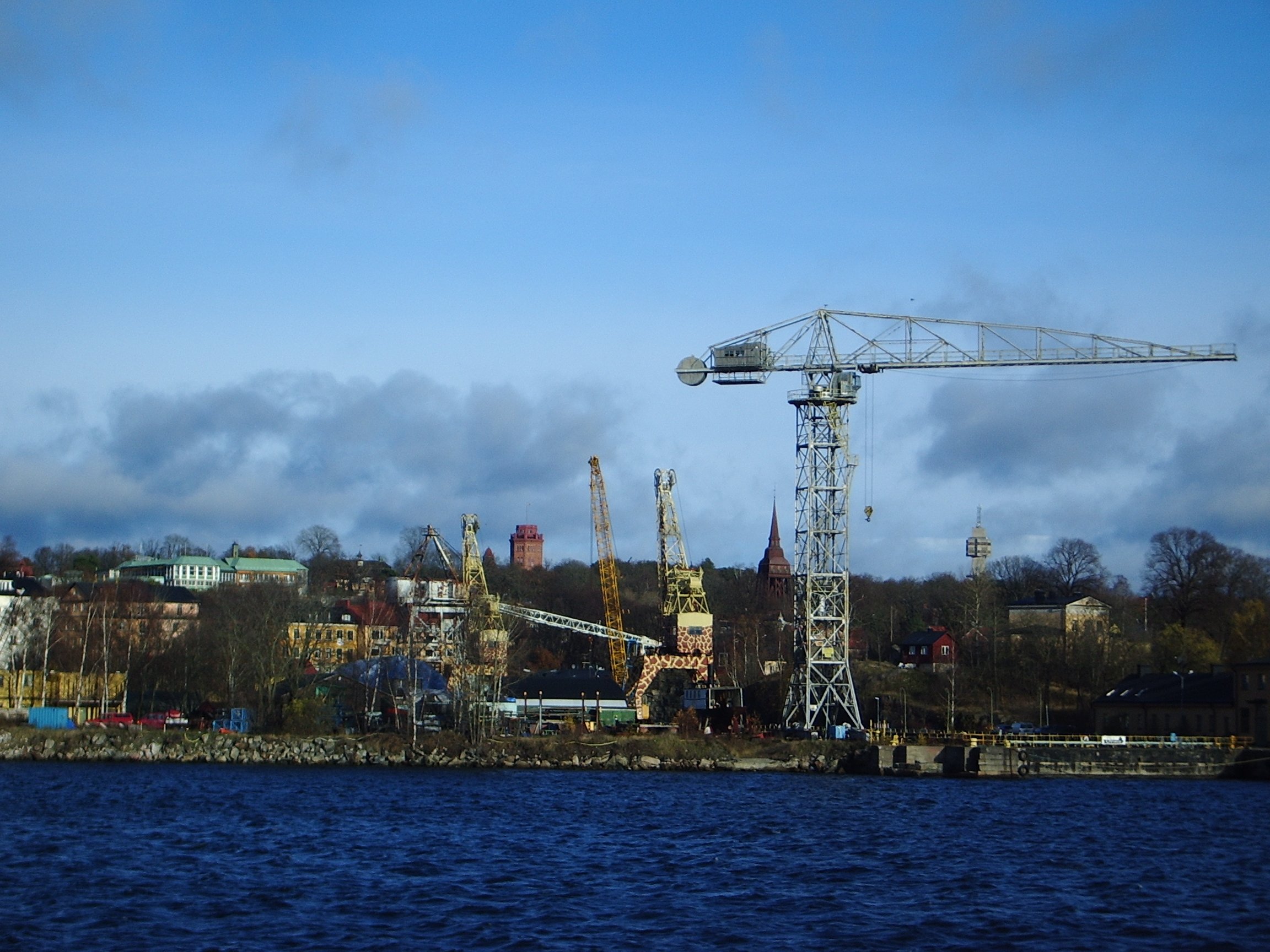
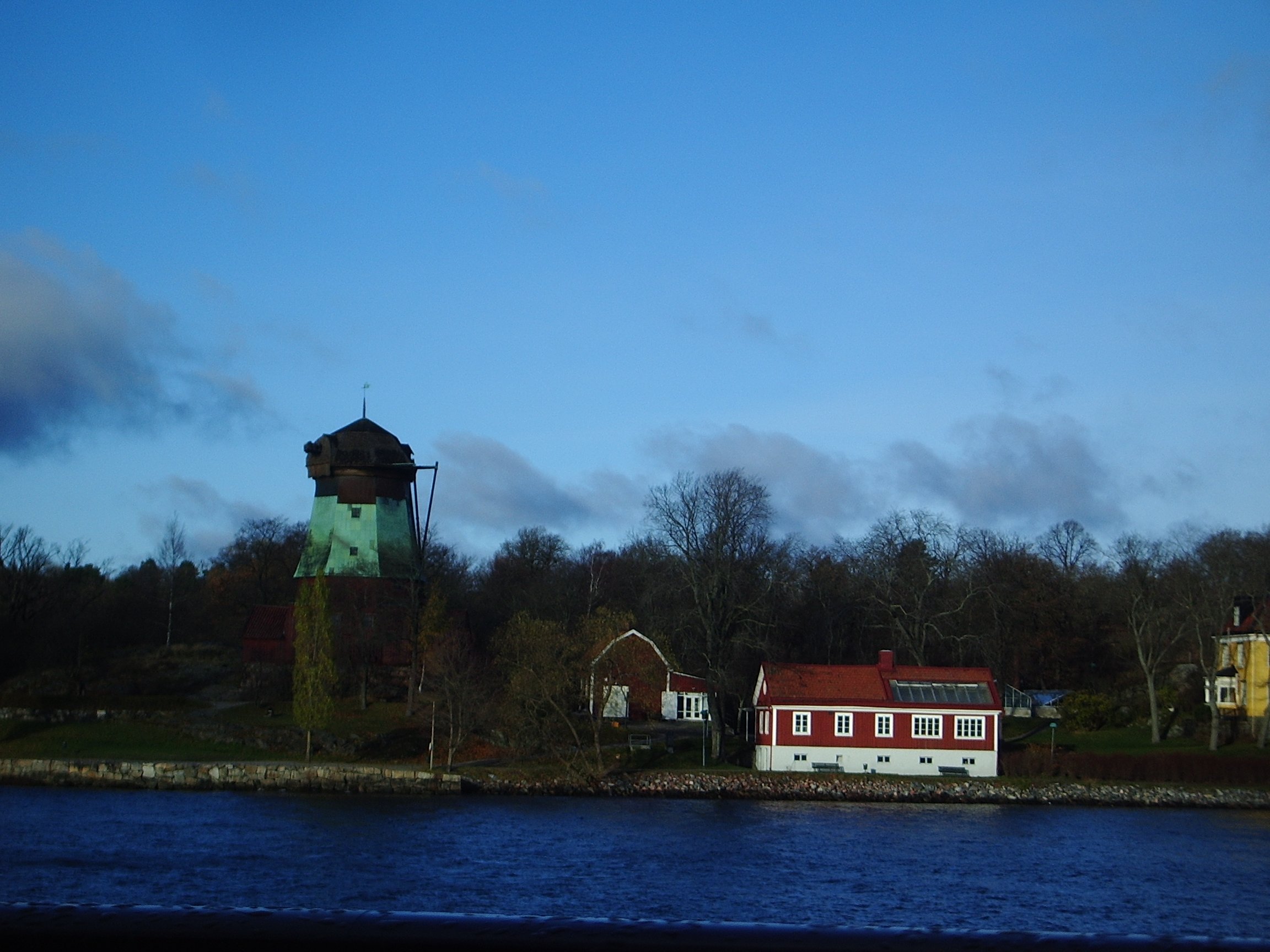
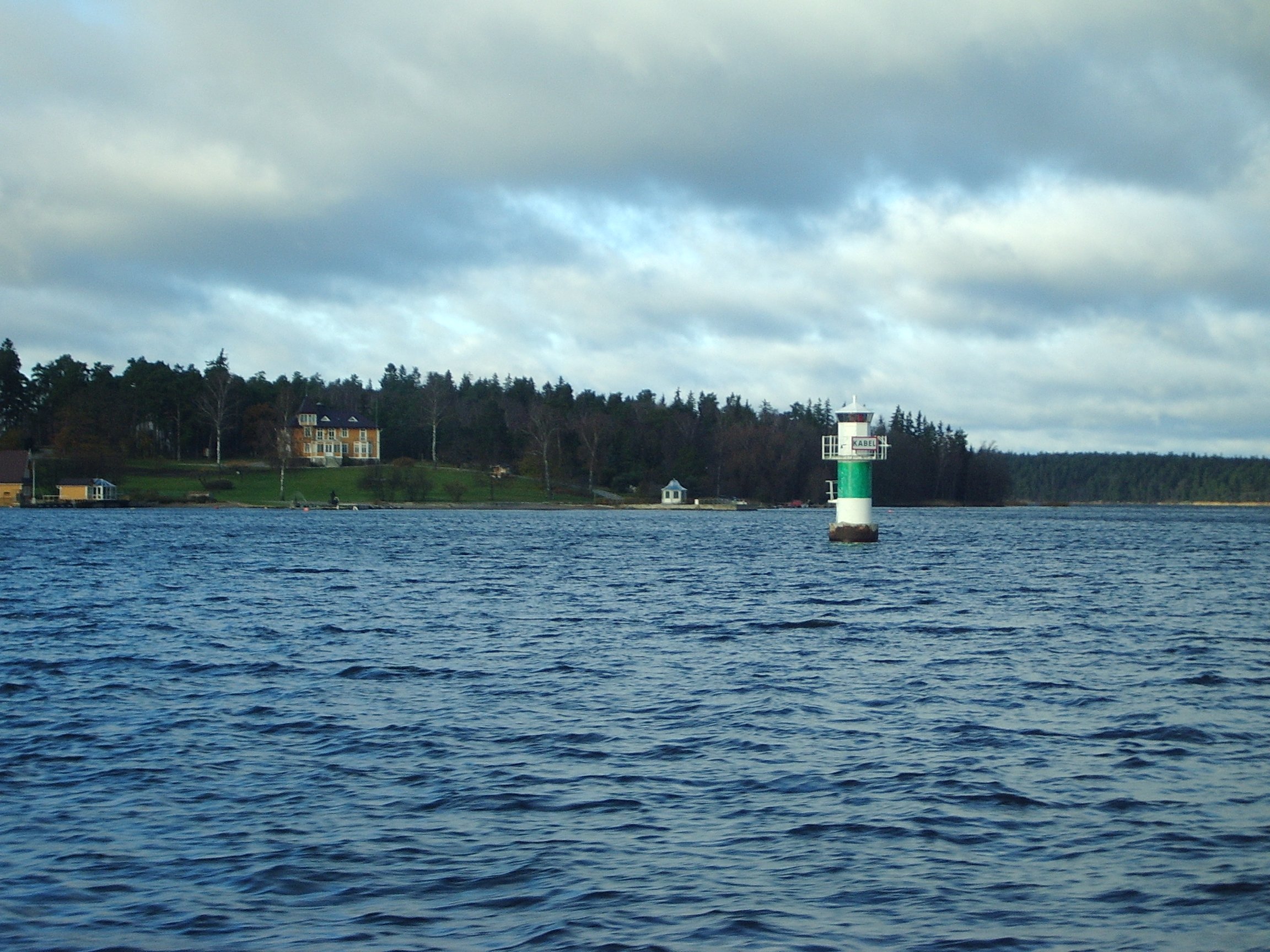
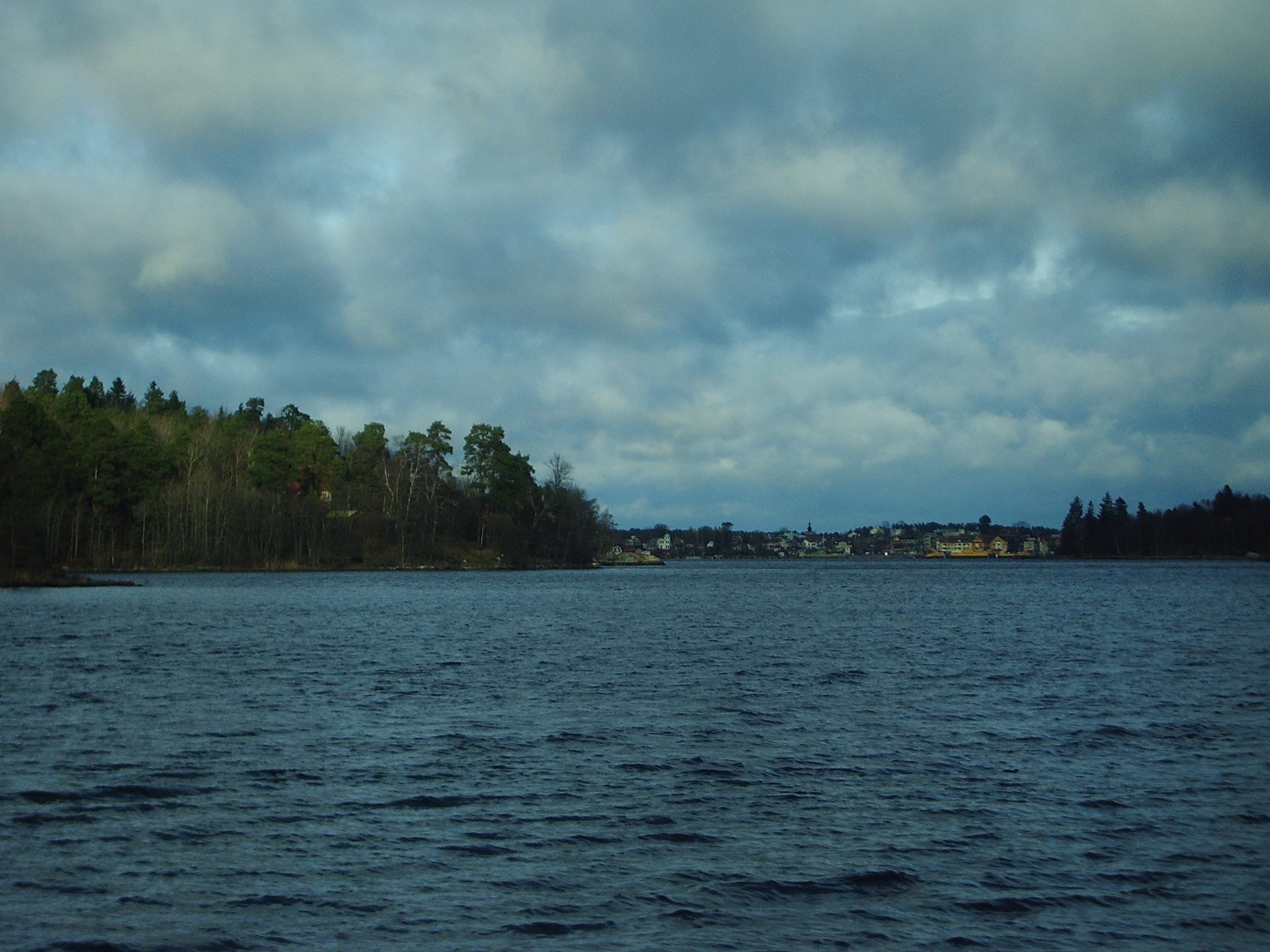
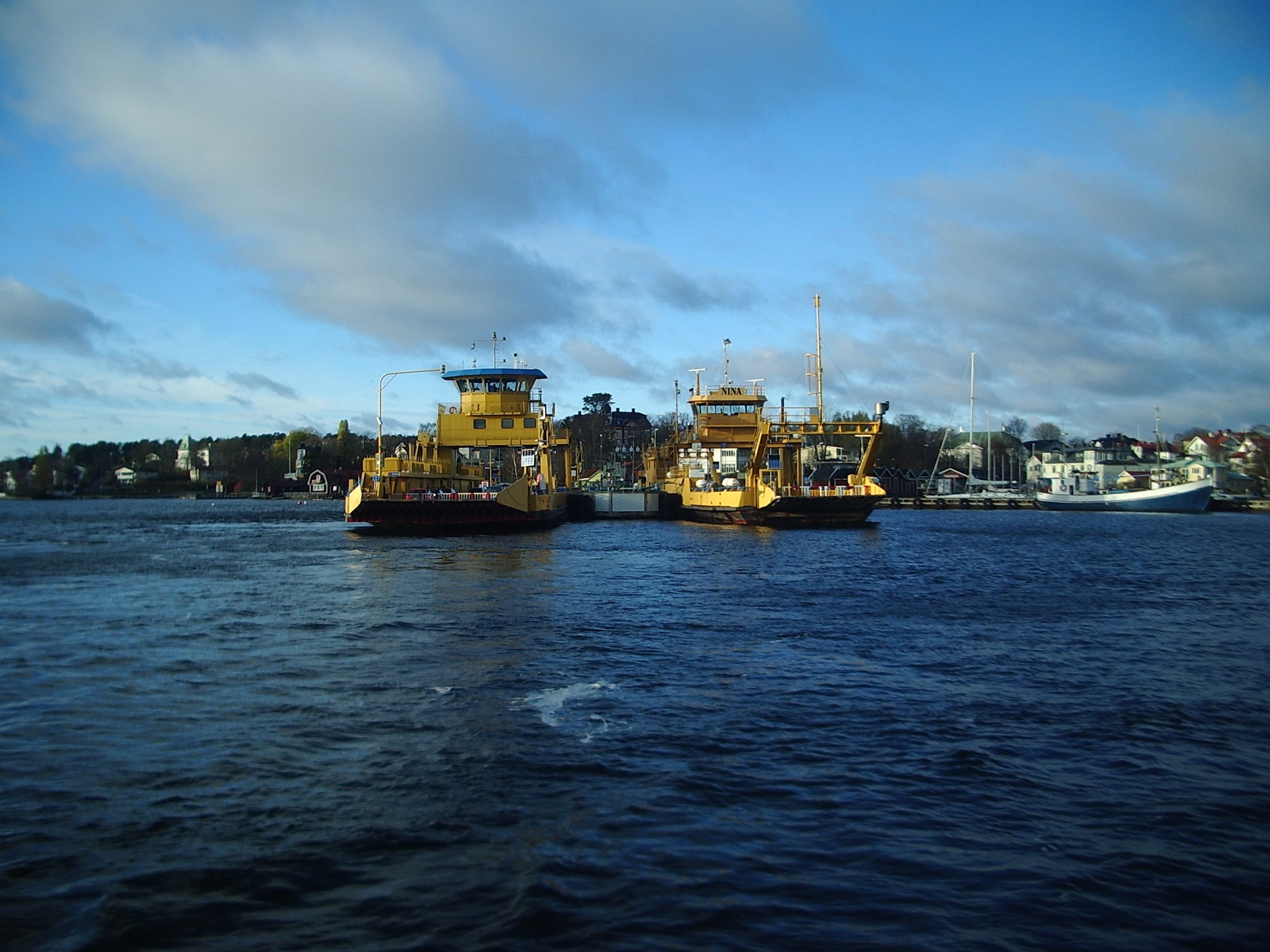
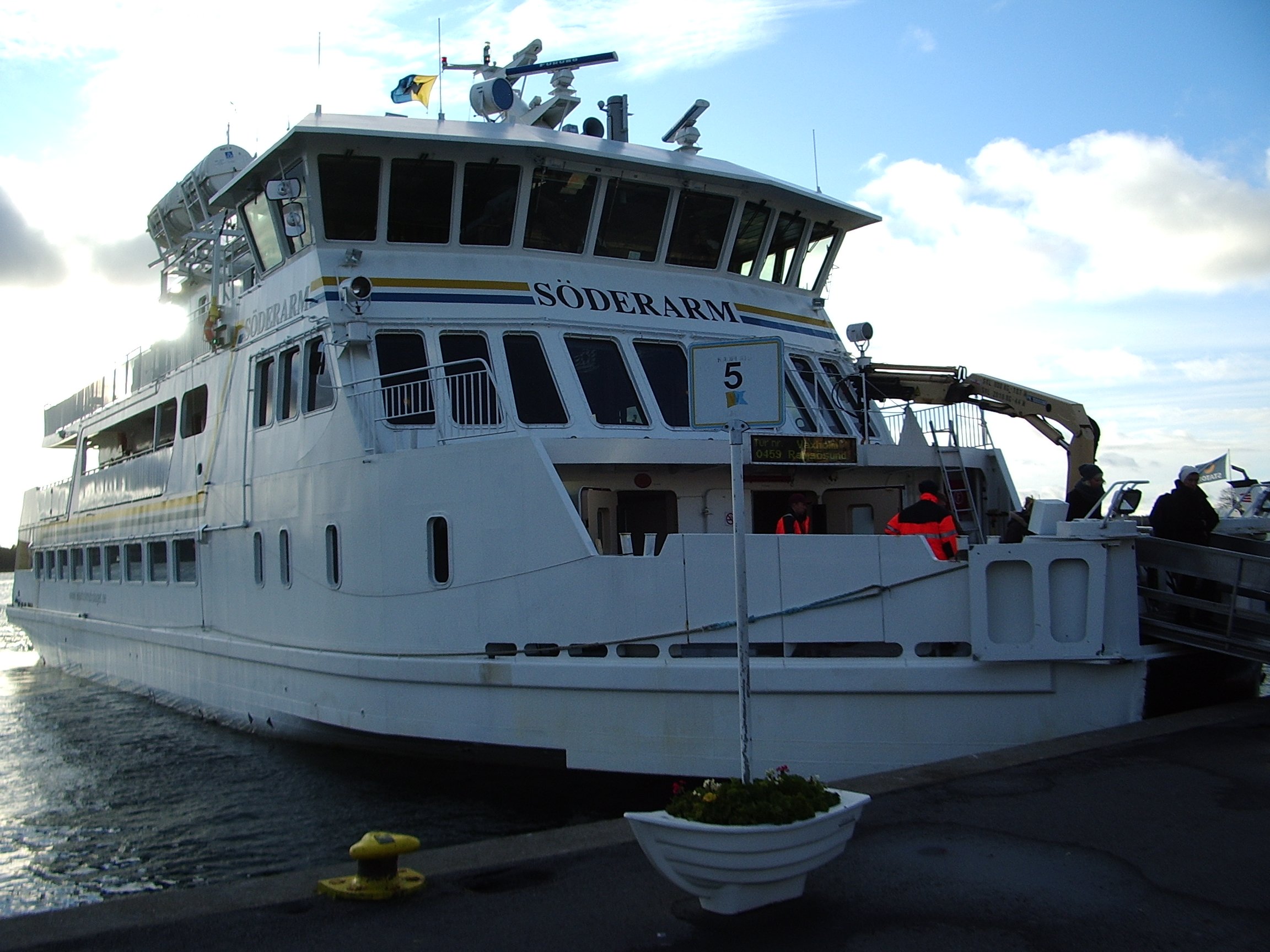
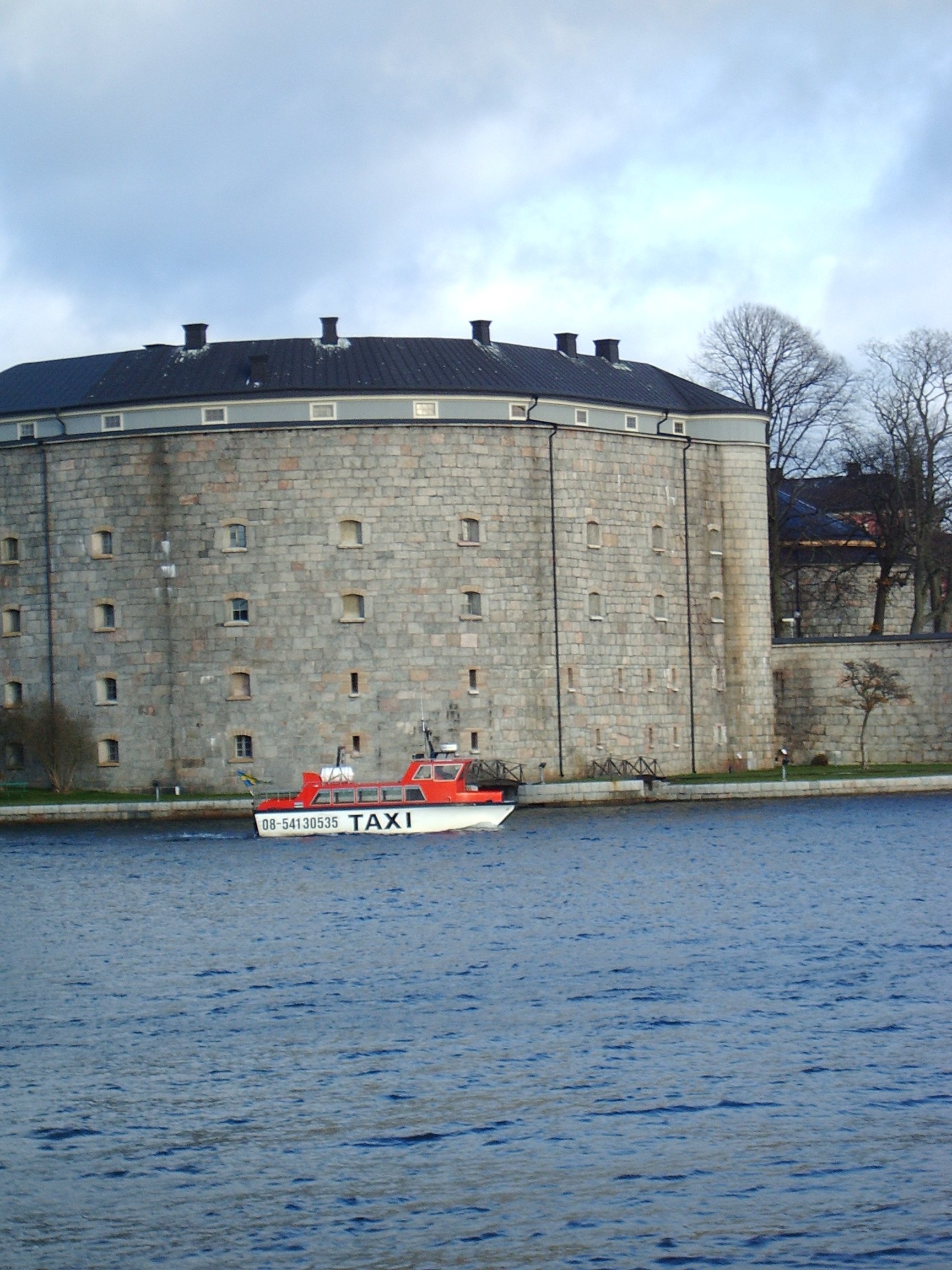
Grona LundGiraffe cranesA windmillIslandsA lighthouseVaxholm in the distanceCar ferriesThe ferry SöderarmThe fort/prison, and a water taxi
So I checked the map to find a suitable destination on the line through the tunnel and found my way to the platform.
Saltsjöbaden is a small suburb some distance from the city centre, it is on the end of a penninsular, and hence, on the end of its train line (though apparently the line did have a further station on it, but I can’t figure out where the track would have gone). The station is by the Grand Hotel, an impressive waterfront hotel with ample yatch parking.
There are a number of small islands here, some connected to the mainland with small bridges, in some cases only allowing pedestrian access, and in at least one case the bridge was bigger than the island (I’m not sure whether it is tidal here, but I don’t think so, theres not much evidence of continuously varing sea levels).
Having found the landing point of the ferry back to Stockholm I decided not to catch the 2:15 ferry and instead wait for the next one. Again, the wrong thing to do since the next was three hours away. So I took a little while to explore around the neighbourhood, which seemed to consist mostly of ostentatious houses perched on rock outcrops.
Boredom set in at around the same point my hands started to freeze so I figured it was time to get the train home rather than wait for the next ferry.
I had intended to take a boat ride to Vaxholm, but had managed to get myself confused about where to catch it – I first went to the Djurgården ferry jetty. By the time I arrived at the right place I could see what I thought might be the boat I wanted just getting ready to leave. It was one of those moments where if I knew it was the right boat I could have run for it. As it was I thought it wouldn’t be too long before the next one. Little did I know it would be three and a half hours before that.
So I went to explore the harbourside on the north of Södermalm. While I was there I found a bizarre little railway line that headed along the base of the cliff parallel to the road, then disappeared into a tunnel and thought that might be an interesting substitute for a boat journey.
Somehow I managed to turn the wrong way out of Karlberg Pendletåg station on my way to the Slott, I could see where I wanted to be, but there was no way to get there short of navigating across a major rail artery, a six metre drop and a dual carriageway. I thought better of it and kept walking to the bridge. Sadly the bridge, Sankt Eriks Bron, took me across the water too, over to Kungsholmen. Climbing up the stairs to the bridge you pass through some wonderful spaces – the bridge is a combined T-Bana and road bridge, so you pass the T-Bana line on the way up to the road level, but underneath that is a derelict space through which a surprising number of people were walking. I assume it was really a pathway or cut through of some kind but I wasn’t feeling brave enough to investigate further this time around.
Over on Kungsholmen I wound my way down to the strand and along the waterfront. The Slott across the water. The path passes through a boatyard, past some allotments and into a building site. Looking at the map I see that this is actually very close to Stadshagen, a T-Bana station we got off at looking for adventure and excitment but found only factories and a hospital.
By the time I got to the chemical works it was getting dark, so it was time to start looking for a T-Bana station to get back to T-Centralen.
How many dicks is that?Looking across toward Vasa StadenKungsholms StrandAcross the water to Vasa StadenMore of the waterBetalstation – the checkpoint for the congestion chargeSome terrible metal animals eating a buildingThey are insatiable