The Thiel Gallery is a small art gallery at the end of Djurgården. This is a picture of a house over the way from the gallery itself.

The Thiel Gallery is a small art gallery at the end of Djurgården. This is a picture of a house over the way from the gallery itself.
It was a spooky foggy night at Arlanda, and I had arrived early to pick A. up so thought I’d take a wander around.


Within the ruins of Hovgården is a runestone, Upplands 11:
“Rað þu runaR. Rett let rista ToliR bryti i roði kunungi. ToliR ok Gylla letu ris[ta] …, þaun hion æftiR [si]k(?) mærki … Hakon bað rista.”
“You read the runes! Right let cut them Tolir, bailiff in Roden, to the king. Tolir and Gylla let carve (these runes), this pair after themself as a memorial… Håkon bade carve.”


The ruins of Hovgården on Adelsö are quite extensive – this was the royal seat while the city was on the nearby island of Björkö.


The ferry over to Lilla Stenby crosses while the lake around is frozen.


[Read aloud to Adelle]
Beyond Siberia by Christina Dodwell
I found this book in large print lurking in a National Trust second hand bookshop, and I have yet to find a way to resist travel books, especially when they involve tundra.
As a book published in 1993 this offers a window into a parochial world distant in both time and space.
Dodwell took the opportunity shortly after the dissolution of the Soviet Union to travel to the farthest reaches, the Kamchatka peninsula. An area crude even by the standards of the rest of Russia at the time.
She spends some time with a dance troupe entertaining some of the local tribes, visits a nature reserve and joins some reindeer herders for their springtime. Immersing herself in the local life for three months she documents a lot of what she sees and the people she meets.
It was not common for there to be visitors from outside the area at that time, never mind from another country, but it seems like everyone was welcoming and happy to share their experiences with her.
She was game for all kinds of immersion, driving reindeer sleds and eating blood soup and riding vezdekhod (water tanks for in Russia) and hunting mammoth bones, and describes some of those experiences in gory detail.
My wanderlust is not so strong with the subject matter, it all seems rather primitive and I’m pretty sure I would have baulked at the food. This is why I like reading about these things that other people have done, I can find out about places I have no way or desire to visit myself.
The writing style is a more like a diary that has been edited rather than an actual book being written. This gives it a charm of following the lives of her companions, while making it feel a little incoherent.
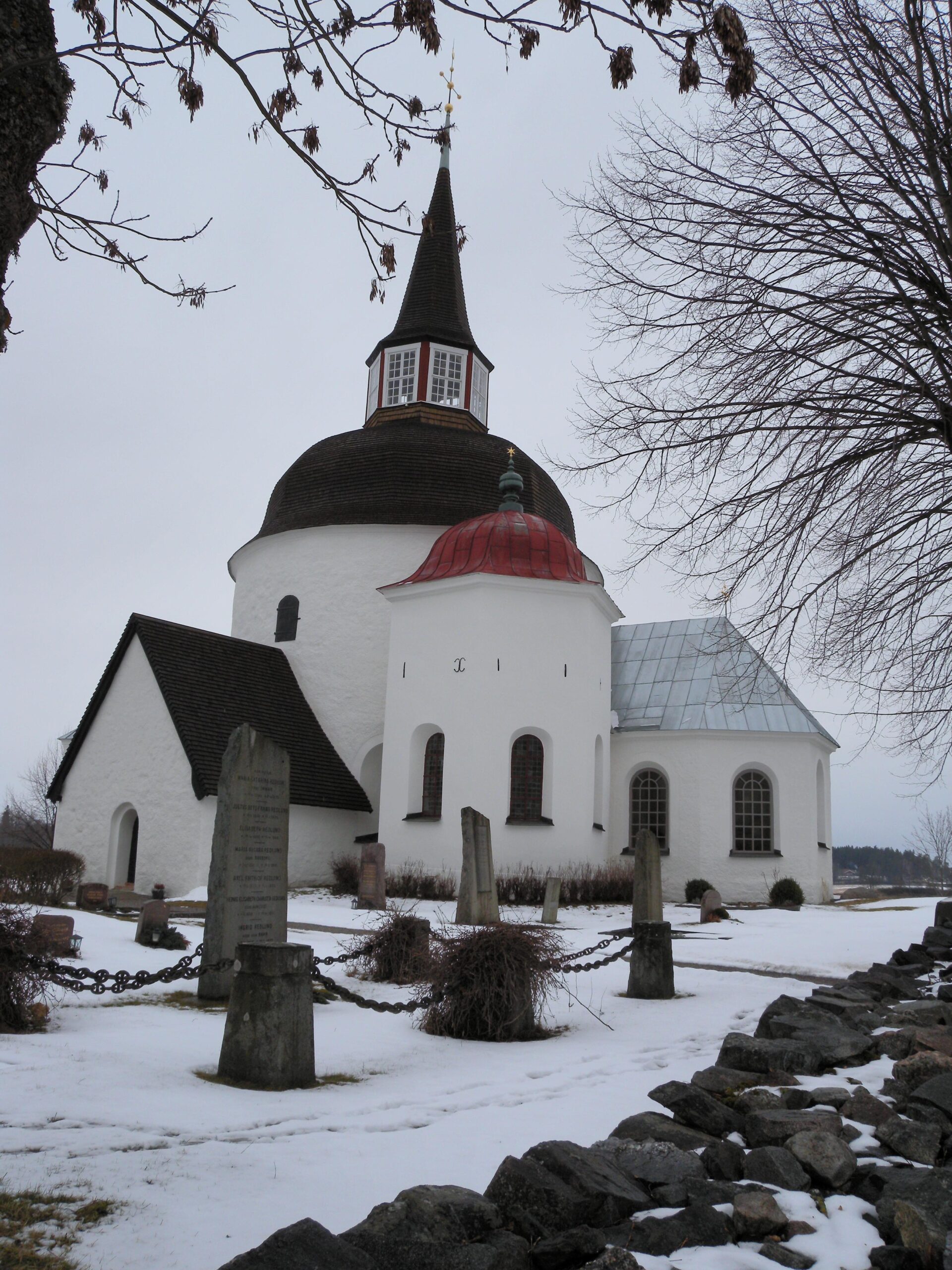
Further north west on the island of Ekerö is the village of Munsö, with a round church.

Upplands 19: “Frösten reste denna sten efter Hadske sin fader”
“Frösten raised this stone after Hadske, his father”


Asknäs is a small village on the island of Ekerö.


Outside the town of Ekerö is a small palace.


