Neil Hopcroft

A digital misfit

Book review: Final Destination by Nige Tassell

[Audiobook]

Final Destination, Riding Britain’s Trains to the End of the Line, by Nige Tassell

This book follows a tour, north to south, of the railway lines of Britain, taking the train to the end of sixteen train lines and exploring what he finds at each.

In each case he describes the journey, the train and some of the characters he encounters on it, the scenery through which it travels and sometimes some of the history that made the line what it is today.

Once he arrives, he explores the place he alights in, often a forgotten town of some kind, somewhere that doesn’t seem like a destination. There are a number of liminal places, where land meets sea, tracks cannot continue.

Each of the lines he rides has its own character, not only from the landscape through which it travels, but from the people it carries, staff and passengers. He records some of the overheard conversations, little peeks into the lives of strangers.

There are a number of highlights, he joins a trainful of goths heading across the moors to the Whitby festival and a townful of vikings. His description of his traversal of the desert of Dungeness almost, but not quite, captures a dismal post nuclear wasteland, spoiled only by timing his narrow gauge visit in the height of summer, when there were plenty of day visitors. Memories of family visits to Camber Sands from my own childhood abound.

This is the kind of book I could have/should have written, riding to the ends of the rails myself many times, just to see what was there, although most of my adventures were on city subway systems. Tokyo provided abundant opportunities for this kind of exploration, and, if you are feeling particularly enthusiastic, you can find my livejournal entries imported into the early days of this blog – let me know if you find a good entry, I didn’t find anything particularly relevant in my cursory search.

Of course I didn’t write these adventures up very well at the time and there is now no way to reconstitute them from their hazy memories. Next time I impulsively move to another country I’ll do a better job.

A book for those who want to explore the rail network without the hassle of tickets and timetables, or actually going anywhere.


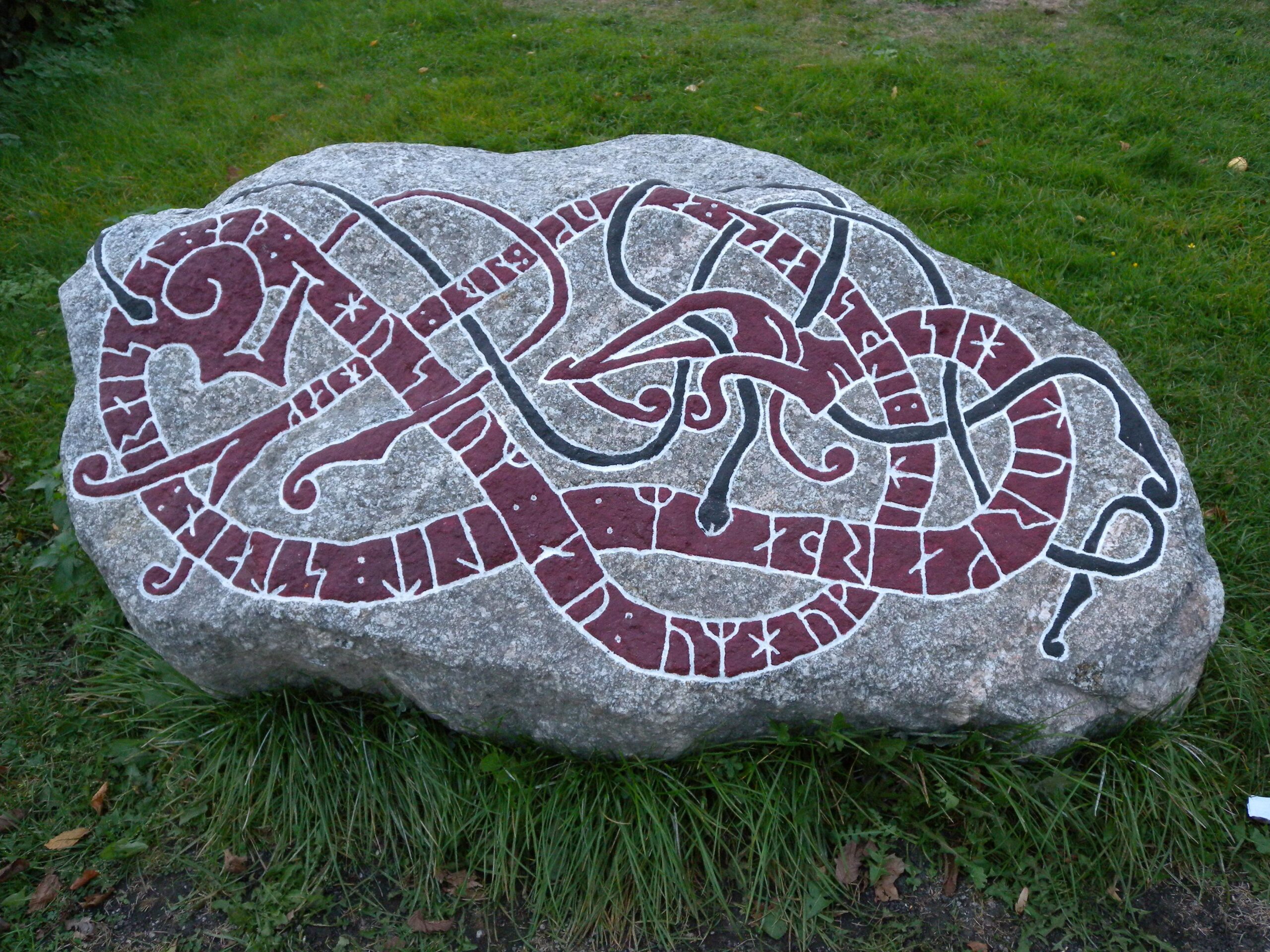
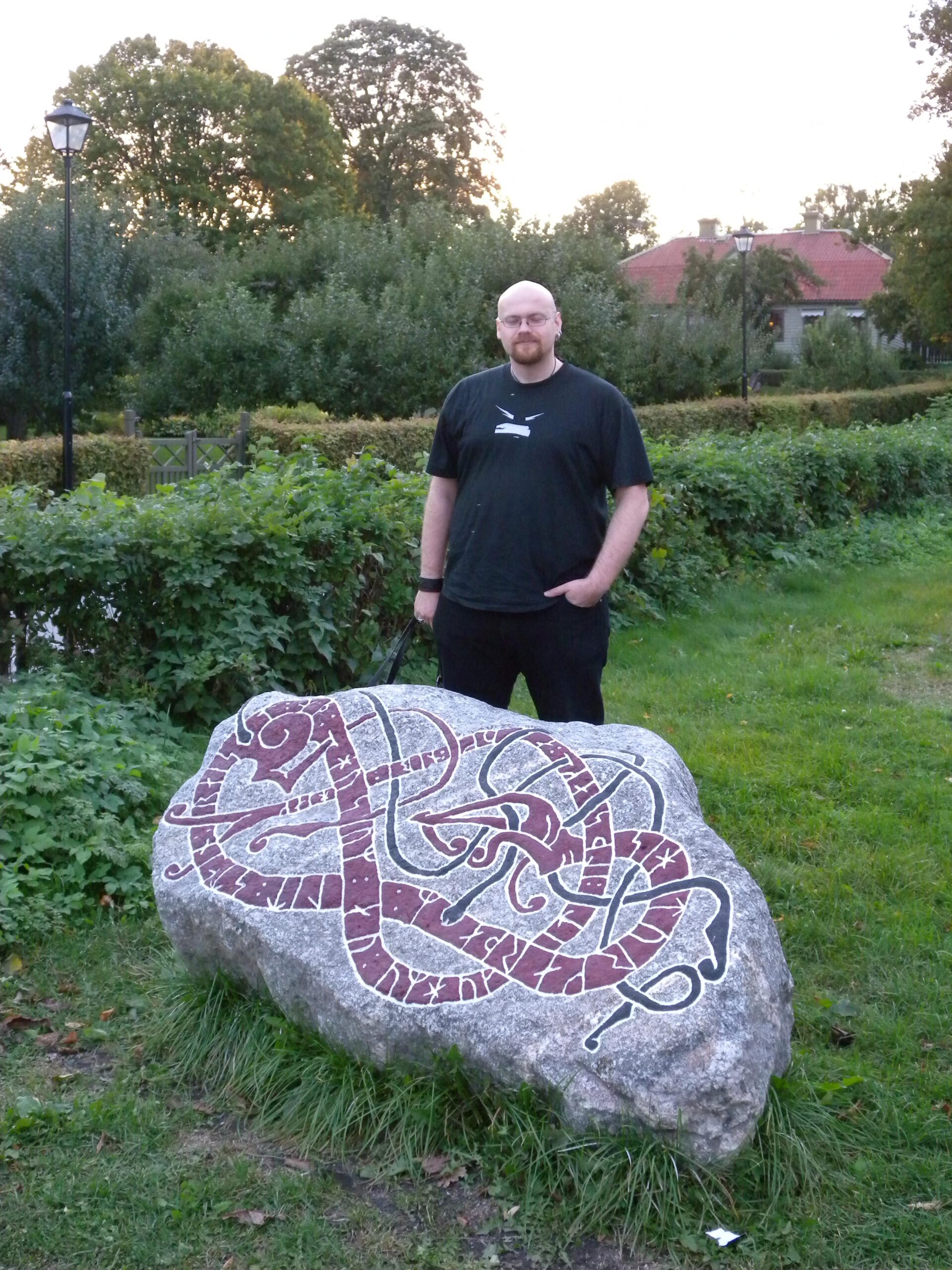
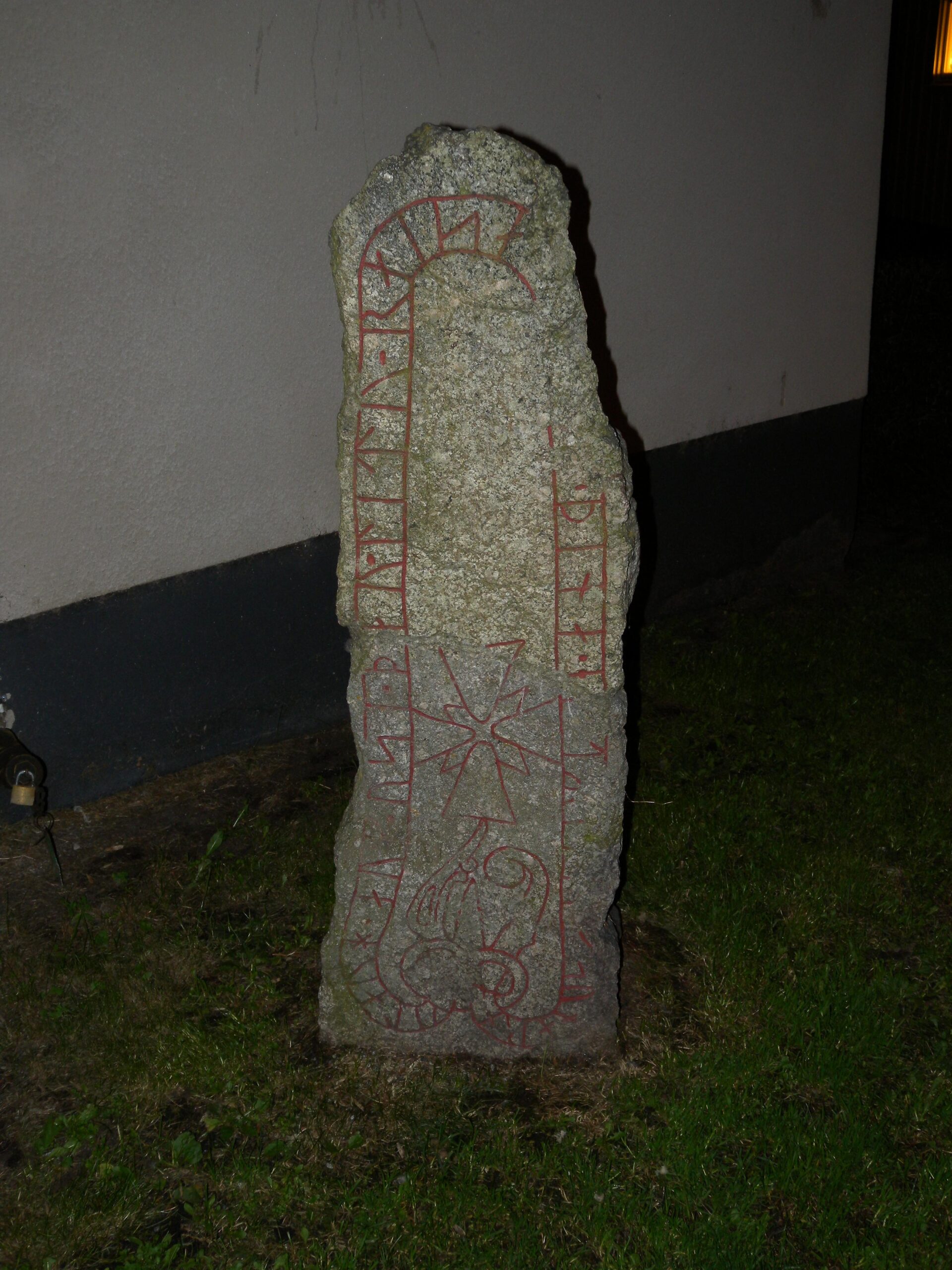
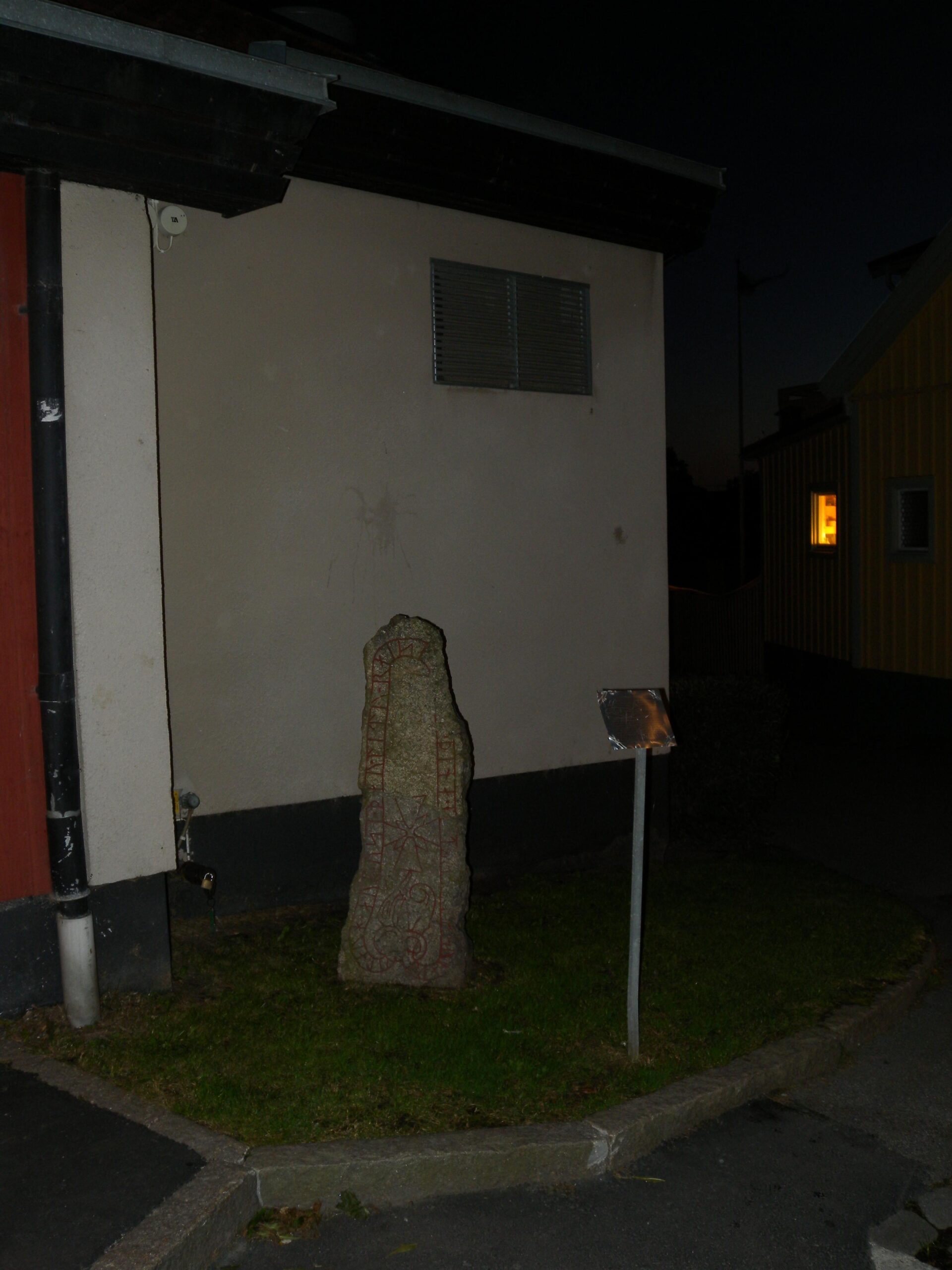
Gällsta runestones

Part of the Runriket
“In Gällsta, there are three rune stones that mention four generations of the same clan. There is a fourth stone as well, but it has no inscription, only a cross. One of the stones has been signed by Öpir, one of the most common rune carvers of the later 11th century. On another stone, you can clearly see the repair marks that were made after it had been cut in two in the 19th century to by used as gateposts at a nearby farm.”

Upplands 232:
“tosti ÷ uk ‘ sihus ‘ uk ‘ sihmar ‘ litu ‘ raisa ‘ sta– * iftiR ÷ tuba ÷ faþur * sin”
“Tosti ok Sigfuss ok Sigmarr letu ræisa stæ[in] æftiR Tobba/Tubba, faður sinn.”
“Tosti and Sigfúss and Sigmarr had the stone raised in memory of Tobbi/Tubbi, their father.”

Upplands 231:
“iþinui ‘ uk ‘ austain ‘ uk ‘ ulfr ‘ uk * ol(a)[fr * litu * raisa * s]tain * iftiR hal(f)tan faþur sin”
“Heðinvi ok Øystæinn ok UlfR ok OlafR letu ræisa stæin æftiR Halfdan, faður sinn.”
“Heðinvé and Eysteinn and Ulfr and Ólafr had the stone raised in memory of Halfdan, their father.”

Upplands 229:
“halfntan ÷ auk ‘ tubi ÷ litu ‘ risa ‘ stin ‘ at ‘ huta ‘ faþur ‘ sin ‘ sun * þorbiarn ÷ ybir ÷ risti * ruan”
“Halfdan ok Tobbi/Tubbi letu ræisa stæin at Udda, faður sinn, sun ÞorbiarnaR. ØpiR risti runaR.”
“Halfdan and Tobbi/Tubbi had the stone raised in memory of Oddi, their father, Þorbjôrn’s son. Œpir carved the runes.”


Risbyle runestones

Part of the Runriket…there are two runestones at Risbyle.
“The two runic stones here at Risbyle were raised att the beginning of the 11th centure and they are among Upplands oldest. Here we meet the Skålhamra family, one of the powerful dynastics which lived in the district around lake Vallentuna during the Viking Age. The test on the stone nearest the Skålhamra road mentions Ulvkättil, Gye and Une who ‘had this stone raise after Ulv their good father. He lived in Skålhamra’.”

Upplands 160
“ulfkitil * uk * kui uk + uni + þiR × litu * rhisa × stin þina * iftiR * ulf * faþur * sin * kuþan on * buki * i skul(o)bri * kuþ * ilbi * ons * at * uk * salu * uk * kusþ muþiR * li anum lus * uk baratis”
“Ulfkætill ok Gyi ok Uni/Unni þæiR letu ræisa stæin þenna æftiR Ulf, faður sinn goðan. Hann byggi i Skulhambri. Guð hialpi hans and ok salu ok Guðs moðiR, le hanum lius ok paradis.”
“Ulfketill and Gýi and Uni/Unni, they had this stone raised in memory of Ulfr, their good father. He lived in Skolhamarr. May God and God’s mother help his spirit and soul; grant him light and paradise.”

Upplands 161
“ulfR * iuk i barstam * iftiR * ulf * i skulobri * mak * sin * kuþan * ulfkil lit akua”
“UlfR hiogg i Baristam æftiR Ulf i Skulhambri, mag sinn goðan. Ulfkell let haggva.”
“Ulfr of Báristaðir cut (the stone) in memory of Ulfr in Skolhamarr, his good kinsman-by-marriage. Ulfkell had (it) cut.”


Book review: The Book by Keith Houston

[Audiobook]

The Book, a Cover to Cover Exploration of the Most Powerful Object of our Time, by Keith Houston

I was looking for an audiobook about marginalia but failed miserably (recommendations, anyone?). Instead, I found this.

The history of the book is long and storied, this book goes into a lot of detail about the different part that make up the book.

It starts by exploring the history of substrates, papyrus, parchment and paper, explaining the making and significant developments along the way.

Then it talks about the development of inks, and the processes by which the two are joined, with various writing and printing mechanisms. This is followed by a history of how collections of written work were put together, starting with scrolls and working through codices to the modern day idea of a book. Ultimately it talks about the binding of pages together into the portable units of knowledge we know today.

The history here talks about the feeding of ideas from one culture to another, how each learned from others, the innovations flowing in all directions between the Chinese, the Christians, the Muslims, the Egyptians and many others, with the silk road being a vital highway for the transmission of these ideas.

There is also a lot of context and further information added about some of the landmark inventions along the way. The moveable type of Guttenbergs press was certainly innovative, but it was not an advance made in a vacuum, there were other developments around the same time which he brought together. And the switch to the automation afforded by adding rollers to these presses was nearly as important to the widespread dissemination of information.

Something which is alluded to but largely missing from this book is a discussion of the rise of literacy over the period covered – books had to have understanding eyes to read them.

A potted history of the book, this tome covers a lot of ground without great depth – it keeps itself interesting by including a lot of stories of significant people along the way. A worthy read, a jumping off point for many potential interests, codicology, the German book fairs, papyrus making, tanning, lithography and plenty of others.


Fällbro runestones

Part of the Runriket.
“The two runic rock carvings south of the creek show that todays road coincides largely with the ancient route, which during the Iron Age ran to the west of the Vallentuna lake. At that time, the road went between these two runic carvings.
100 metres northwards on the eastern side of the road, there is a runic stone which, like the two runic rocks, tells about the bridge-builders of the Viking Age. The watercourse which then crossed the route was considerably larger than the brook which we see today.”

Upplands 142: “Ingefast lät resa stenen och göra bron efter Jarlabanke sin fader och Joruns son, och Kettilö lät resa stenen efter sin man. Öpir ristade.”

Upplands 146: “Ingeborg lät hugga hällen och göra bron efter Holmsten, sin man, och efter Torsten, sin son”

Upplands 145: “Torkel och Fulluge läto hugga denna häll och göra bron efter Sten, sin fader. Olev högg.”